CRM Data Enrichment: Turn Thin Records into Revenue
By Nathan Weill · August 28, 2026

CRM data enrichment is the process of adding missing, verified, and useful information to the customer and company records already sitting in your CRM. However, most CRMs don’t fail in a single, catastrophic collapse. They degrade quietly, one incomplete record at a time.
It starts innocently enough. A high-intent lead fills out a demo form, leaving only their name and a work email. Because there’s no company size or industry attached to the record, the CRM defaults to a general queue. An inside sales rep takes three days to respond, assuming it’s a small business account. By the time they discover the lead is actually the VP of Infrastructure at a Fortune 500 company, the buyer has already booked a demo with a faster competitor.
This scenario plays out thousands of times a day across modern B2B organizations. Thin records lead to bad assumptions, misallocated sales reps, broken routing rules, tone-deaf marketing campaigns, and hours of wasted manual research.
CRM data enrichment stops this operational bleed. By connecting your database to verified external intelligence sources, enrichment transforms sparse contact cards into complete, actionable profiles. The goal is to give your revenue teams the exact context they need to make smart, fast, and profitable decisions.
What CRM Data Enrichment Really Means
At a basic level, CRM data enrichment is the process of appending missing, third-party firmographic, demographic, technographic, and behavioral data to your existing customer and company records.
The definition goes: CRM data enrichment turns a passive digital filing cabinet into an active revenue engine.
Without enriched data, your CRM holds information, but it offers no guidance. With enriched data, your database answers vital go-to-market questions automatically:
- Does this inbound lead match our Ideal Customer Profile (ICP)?
- Should this account route to an Enterprise Account Executive or an SMB rep?
- Is this company currently using a technology that makes them a prime candidate for our software?
- Is this buyer showing active intent signals around our solution category?
- What specific pain point should our outbound sales team highlight in their initial email?
For teams dealing with messy handoffs, manual updates, and disconnected tools, enrichment often works best as part of a broader workflow automation strategy.
The Hidden Cost of Thin Records
A thin CRM record feels harmless because it sits quietly in your database without raising immediate alarms. But sparse data creates invisible friction points that compound across your entire customer acquisition funnel.
When key properties are left blank, your go-to-market engine breaks down across every department:
- Broken Lead Routing: Without company headcount or geographic data, automation engines cannot route leads to the correct regional or segment-specific sales queues. High-value enterprise accounts end up sitting in unassigned lead buckets. This is exactly the kind of gap a strong sales automation setup is meant to prevent.
- Wasted Sales Capacity: When reps receive un-enriched leads, they spend 15 to 20 minutes before every call digging through LinkedIn, company websites, and registry databases just to establish basic context. That is time stolen directly from active selling.
- Tone-Deaf Marketing Segmentation: If half your database lacks an industry or job function tag, your marketing team is forced to send generic, one-size-fits-all email campaigns. Engagement drops, unsubscribe rates spike, and domain deliverability suffers. Better marketing automation depends on clean, usable CRM fields.
- Inaccurate Lead Scoring: Scoring models rely on complete data points to prioritize outreach. If an enterprise account enters the system with a blank revenue field, the scoring engine assigns it a low priority, letting hot opportunities go cold.
- Distorted RevOps Analytics: Executive reporting relies on accurate field inputs. When industry, team size, and lead source data are missing, attribution models break, making it impossible to see which marketing channels generate your most profitable customers.
The real tragedy of thin data isn't just the missing information, but also the timing. Teams usually discover data gaps after a deal stalls, after an account misroutes, or after a costly campaign underperforms. Enrichment fixes the problem upstream, adding critical context the exact second a record is created.
The Data Triad: Cleansing vs. Enrichment vs. Enhancement
In revenue operations, the terms cleansing, enrichment, and enhancement are often used interchangeably. However, they represent three distinct stages of database maintenance.
| Process | Primary Objective | Concrete Example | Primary Trigger |
|---|---|---|---|
| Data Cleansing | Removes errors, duplicates, bad formatting, and obsolete entries. | Standardizing "US," "USA," and "United States" into a single country value, or merging duplicate contact cards. | High record decay, bounce spikes, or post-event list imports. |
| CRM Data Enrichment | Appends missing, verified third-party data to incomplete records. | Taking an email address and adding company headcount, revenue range, job title, and direct phone number. | Real-time lead creation, form fills, or routine account syncs. |
| Data Enhancement | Combines internal behavioral signals with enriched attributes to create higher-level intelligence. | Calculating an overall "ICP Fit Score" or assigning an account to a "Tier 1 Enterprise" segment based on tech stack and intent. | Advanced scoring, pipeline forecasting, and ABM targeting. |
The Correct Order of Operations
Sequence matters. You must clean first, enrich second, and enhance third.
- Clean: Standardize formatting, deduplicate, and remove dead records.
- Enrich: Append verified firmographics, technographics, and contact data.
- Enhance: Calculate ICP fit scores, tier accounts, and trigger workflows.
If you enrich a messy CRM before deduplicating or fixing your field schemas, you will end up paying data providers enrichment credits to update records that should have been merged, archived, or deleted in the first place.
If your CRM is already full of duplicates, broken properties, and inconsistent naming conventions, start with CRM cleanup and implementation before layering enrichment on top.
The 5 Layers of Enriched CRM Data
Depending on your sales motion, tech stack, and target market, different data points carry different weights. A complete B2B data profile relies on five primary enrichment layers.
1. Firmographic Data (Company-Level Attributes)
Firmographics are the foundation of B2B go-to-market strategies. They describe the structure, scale, and nature of the business behind the contact.
- Core Fields: Legal Company Name, Primary Industry, Secondary Sub-Industry, Global Employee Count, Annual Revenue Range, Corporate Headquarters Location, Regional Office Locations, Funding Stage, Total Capital Raised, Ownership Type (Public vs. Private), Parent Company, and Subsidiary Relationships.
- Why It Matters: Firmographics drive high-level territory management and lead routing. If your software is designed for enterprise companies with more than 1,000 employees, firmographic enrichment instantly isolates those accounts from the small-business noise.
2. Demographic & Contact Data (Individual-Level Attributes)
Demographic enrichment paints a detailed picture of the specific person you are engaging within an account.
- Core Fields: Verified Business Email, Direct Dial Phone Number, Verified Mobile Number, Job Title, Normalized Seniority Level (C-Suite, VP, Director, Manager), Department/Function, LinkedIn Profile URL, Geographic Location, and Employment History/Tenure.
- Why It Matters: High-performing outbound sales teams cannot rely on generic info@company.com emails or main corporate switchboard numbers. Direct dials and verified personal business emails increase connect rates and ensure outreach targets the actual decision-maker.
3. Technographic Data (Technology Stack Insights)
Technographic intelligence reveals the underlying hardware, software platforms, cloud infrastructure, and marketing tools a company uses.
- Core Fields: CRM Platform, Marketing Automation Engine, Cloud Infrastructure (AWS, Azure, GCP), E-commerce Engine, Analytics Tools, Cybersecurity Suite, ERP System, and Customer Support Platforms.
- Why It Matters: If your product is a native integration for HubSpot or Salesforce, knowing a prospect’s current CRM platform changes your entire value proposition. If HubSpot is part of your stack, a specialized HubSpot consultant can help turn that enriched data into usable workflows, scoring models, and reporting.
4. Behavioral & Engagement Data (First-Party Signals)
Behavioral data tracks how a contact or account interacts directly with your brand across digital touchpoints.
- Core Fields: Website Page Visits (specifically high-intent pages like Pricing or API Documentation), Content Downloads, Webinar Attendance, Product Trial Usage, Email Open/Click Patterns, Form Submissions, and Sales Meeting History.
- Why It Matters: While firmographics show who an account is, behavioral data shows what they care about right now. Unifying behavioral signals within the CRM record allows teams to trigger automated follow-up sequences when interest peaks.
5. Third-Party Intent Data (Market-Level Buying Signals)
Intent data monitors web-wide content consumption to identify companies actively researching specific solutions, topics, or competitors before they ever fill out a form on your site.
- Core Fields: Topic Research Spikes, Category Keyword Queries, Competitor Comparison Page Views on Review Sites (e.g., G2, Capterra), Product Review Reads, and Industry Event Participation.
- Why It Matters: Up to 70% of the B2B buying journey happens before a prospect reaches out to a vendor. Intent enrichment alerts your sales team to accounts that are actively in-market, allowing for proactive, well-timed outreach.
Under the Hood: How CRM Enrichment Works
While enrichment tools make the process feel instantaneous, a structured five-stage technical architecture operates behind the scenes.
Stage 1: Record Matching
The enrichment engine takes an incoming record and searches external databases for a matching corporate or individual entity.
- Company Matching Primary Keys: Corporate Website Domain (e.g., company.com), Legal Name, and Headquarters Country.
- Contact Matching Primary Keys: Business Email Address, First/Last Name + Company Domain, or LinkedIn Profile URL.
Operational Note: Matching reliability drops significantly when dealing with personal email domains (e.g., @gmail.com or @yahoo.com). High-performing enrichment workflows enforce logic that strips out consumer domains or requires business email inputs for automated lookup.
Stage 2: Data Verification & Validation
A reliable enrichment validates the accuracy of raw data in real-time. This includes running real-time SMTP ping checks to verify email deliverability, checking business registries to confirm active corporate status, and scanning professional networks to verify that a contact still holds their listed job title.
Stage 3: Property & Schema Mapping
Before enrichment data enters your CRM, a RevOps manager must define explicit field mapping rules. Vendor attributes must map cleanly to your native database schema:
Vendor Payload: “emp_count_range” leads to CRM Field: "Company_Size_Standardized"
Without careful mapping, an enrichment integration can create duplicate properties (e.g., populating a new Employee Count field while leaving your primary Company Size field blank), leading to broken workflows and reporting inaccuracies. This is one reason CRM enrichment often overlaps with software setup and optimization, not just data purchasing.
Stage 4: Execution Strategy
When new enrichment data arrives, the system must decide how to handle existing field values. You have three primary execution models:
- Fill Blanks Only (Default / Safest): The enrichment engine populates properties only if the field is currently empty. Existing data is never touched.
- Always Overwrite: Third-party vendor data replaces existing CRM values automatically. (Use with extreme caution).
- Selective Overwrite via Source Hierarchy: Rules dictate which data source takes precedence based on origin.
Verified first-party data entered manually by a sales rep during a discovery call should almost always override third-party estimated data provided by an enrichment API.
Stage 5: Continuous Refresh & Decay Prevention
B2B data decays at an alarming rate; roughly 25% to 30% of business data becomes outdated every year as people change jobs, companies rebrand, headcount scales, and office locations shift.
Static, one-time enrichment projects lose value quickly. Modern systems establish scheduled enrichment cadences, re-verifying active target accounts every 60 to 90 days to maintain data freshness.
Departmental Benefits: How Revenue Teams Win
Enriched records provide tailored operational advantages across every branch of your go-to-market organization.
1. Sales Teams: Eliminating Manual Research
When reps don't have to spend half their day playing detective on LinkedIn, their productivity skyrockets. Enriched direct-dial phone numbers and verified business emails increase outbound connect rates, while technographic data lets sellers tailor their pitch to the client's current software setup from minute one.
This is where sales automation consulting becomes especially valuable: enriched data can trigger routing, task creation, follow-up reminders, and sequence enrollment without reps manually updating every field.
2. Marketing Teams: Frictionless Forms & Personalization
Every field you add to a website form reduces your conversion rate. Asking for company size, annual revenue, address, and tech stack causes potential buyers to abandon the page.
Enrichment lets you use frictionless forms, asking only for an email address and name, while automatically populating 15 firmographic properties in the background. Marketing can then run hyper-targeted Account-Based Marketing campaigns grouped by industry, company scale, or intent spikes.
For teams that want those enriched fields to trigger nurture journeys, segmentation, and lifecycle campaigns, marketing automation consulting helps connect the data to the actual follow-up logic.
3. RevOps Teams: Automated Governance & Accurate Analytics
For Revenue Operations, enrichment provides the structural integrity needed for scalable growth. It powers automated, rules-based lead routing, enforces strict territory boundaries, eliminates duplicate company profiles, and ensures executive dashboards display clean, accurate conversion metrics across every pipeline stage.
This is where workflow automation services can tie enrichment to routing, alerts, reporting, approvals, and cross-tool data sync.
4. Customer Success Teams: Spotting Churn Risks & Upsells
Enrichment isn't just a top-of-funnel tool. Customer Success teams use continuous enrichment to track account health. If a key customer account undergoes a sudden hiring spree, raises a new funding round, or installs a complementary software tool, the CRM flags the account for an immediate expansion or upsell conversation. Conversely, if a key executive sponsor leaves the client's organization, the system alerts the CSM to re-engage the account before churn risk escalates.
Evaluating the Enrichment Tech Stack
Selecting the right CRM data enrichment platform requires understanding vendor architectures, data coverage, and integration capabilities.
Native CRM Enrichment
- Pros: Deep, out-of-the-box integration with native properties, scoring models, and workflow builders. Extremely simple setup for non-technical teams with unified UI management.
- Cons: Database coverage may be less comprehensive in niche international markets or specialized sub-industries compared to dedicated data providers.
Dedicated Platforms & Data Engines
- Pros: Massive global database coverage, deep direct-dial verification, specialized technographic tracking, advanced intent signals, and flexible API webhooks.
- Cons: Requires manual property mapping, RevOps oversight, API management, and careful monitoring of monthly credit usage.
Single-Source vs. Waterfall Enrichment
- Single-Source Enrichment: Your CRM queries a single data vendor (e.g., ZoomInfo). If that vendor lacks data for a specific contact, the record remains empty.
- Waterfall Enrichment: Your system queries Provider A. If Provider A returns a blank or low-confidence match, the workflow automatically passes the request to Provider B, then Provider C, until a verified match is found.
For more advanced revenue workflows, enrichment can also feed AI automation services, such as lead qualification, message classification, CRM updates, and automated routing.
Tool Comparison Matrix
| Enrichment Platform | Best Primary Use Case | Key Strengths | Regional / Focus Strengths |
|---|---|---|---|
| HubSpot Breeze Intelligence | Native HubSpot Ecosystem teams. | Zero-friction setup, seamless property mapping, native workflow integration. | Global coverage, highly optimized for inbound workflows. |
| Apollo.io | Mid-market outbound sales & pipeline teams. | Comprehensive contact database, integrated engagement tools, cost-effective pricing. | Very strong North American & global B2B coverage. |
| ZoomInfo | Enterprise B2B sales & dedicated ABM motions. | Unmatched depth in enterprise org charts, intent signals, and technographics | Exceptional depth in enterprise US accounts. |
| Cognism | Compliance-focused international outbound. | Phone-verified direct dials, strict adherence to global privacy laws. | Unbeatable EMEA & European B2B coverage; strict GDPR compliance. |
| Clay | RevOps teams building custom waterfall logic. | Multi-source waterfall logic, AI-assisted research agents, custom web scraping. | Infinite flexibility; connects dozens of niche data providers. |
| Lusha | SMB sales reps needing quick contact lookups. | Lightweight browser extension, simple UI, fast contact verification. | Strong for individual SDR research and SMB lists. |
| Zapier-Connected Workflows | Cross-app data movement & custom triggers. | Connects disparate data endpoints to CRMs, email systems, and databases. | Excellent for building custom enrichment triggers across apps. |
6 Biggest CRM Enrichment Pitfalls
Avoid these common operational mistakes when deploying an enrichment solution:
- Enriching a Dirty Database First: Running enrichment on an uncleaned CRM with thousands of duplicate contacts causes you to waste paid API credits updating records that should be merged or deleted. Clean and deduplicate first.
- Overwriting Verified First-Party Data: Never allow an automated third-party enrichment API to overwrite fields manually verified by a sales rep during a discovery call or supplied directly by a customer in a contract.
- Syncing "Ghost Properties" Nobody Uses: Enriching 40 niche fields that no sales rep views, no marketing segment utilizes, and no report tracks simply bloats your database and increases storage costs. Enrich only what drives action.
- Ignoring Overwrite Rule Precedence: Failing to explicitly configure "Fill Blank Only" or field-level protection rules can lead to external vendors wiping out custom property values or resetting manual lifecycle stages.
- Treating Enrichment as a One-Time Event: A database project that runs once and is forgotten will decay within a year. Build continuous, scheduled enrichment workflows for active opportunities and high-value target accounts.
- Disregarding Regional Compliance Standards: Importing personal contact data without verifying data source transparency, opt-out mechanisms, and regional privacy rules (such as GDPR or CCPA) creates legal exposure for your outreach teams.
Final Thoughts
At the end of the day, CRM data enrichment is a revenue accelerator. When your database provides complete, verified context, your entire go-to-market engine operates faster and with greater precision. Leads route to the right reps in seconds, sales calls begin with relevant context instead of basic research questions, marketing campaigns reach the exact audiences they were designed for, and executive dashboards reflect operational reality.
Thin records cause hesitation, administrative delay, and missed opportunities. Complete records drive quick, intelligent, and profitable action.
Ready to enrich your CRM without breaking your lead routing, scoring models, or reporting setups?
Our team can help evaluate your database health, identify missing key properties, and build a scalable, automated enrichment blueprint for your business.
FAQ
Nathan Weill
Certified Zapier expert, premier Pipedrive partner and self-professed tech geek. Nathan has over a decade of experience helping hundreds of companies optimize their workflows, streamline processes and eliminate time-consuming tasks. Founder of Flow Digital, Nathan enjoys harnessing the power of automation to save businesses time and money.
More articles
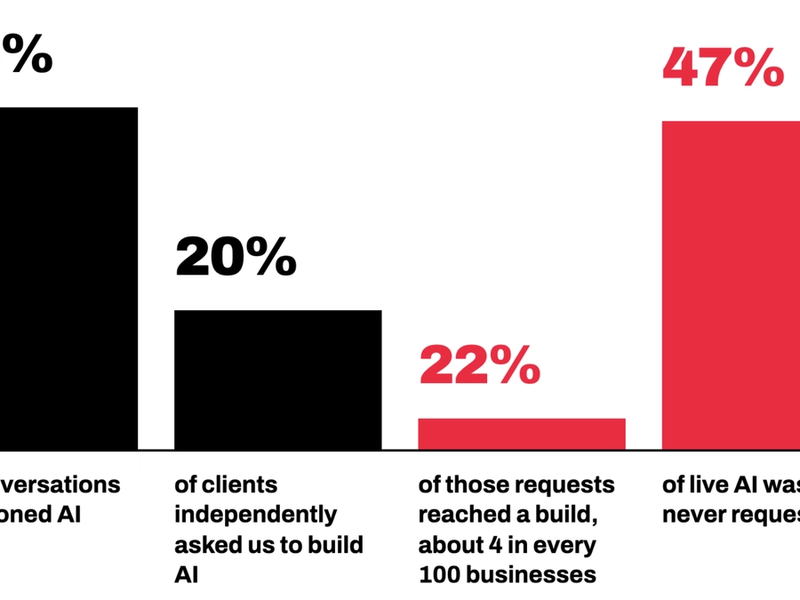
The AI Use Gap: What Businesses Ask For vs. What Gets Built
Read article
The API Key You Handed Over Is a Bigger Risk Than the Password You Wouldn't
Read article
What Is CRM Automation? Definition, Examples & ROI
Read article


Let's make your workflow woes a distant memory.