Top 5 Tools for Workflow Automation for Small Businesses in 2026
By Nathan Weill · May 22, 2026

Workflow automation for small businesses is no longer just about saving a few minutes on admin. Used well, it can connect your CRM, forms, email, accounting, project management, and reporting tools, so work moves without someone manually pushing every task along.
The hard part is not finding automation software. There are plenty of options. The hard part is choosing the right tool for the way your business actually works, and setting it up so it does not become another messy system your team has to babysit.
Below, we’ll compare five of the best workflow automation tools for small businesses in 2026, where each one fits, and when it makes sense to get expert help building the workflow properly.
Quick answer: the best workflow automation tools for small businesses
| Tool | Best for | Choose if if... |
|---|---|---|
| Zapier | Connecting apps quickly | You want to automate work across many different tools without code |
| Airtable | Custom operations systems | Your business runs on spreadsheets and needs a more structured workflow hub |
| Jotform | Forms, approvals, and client intake | Your workflows start with forms, submissions, payments, or approvals |
| HubSpot | Marketing, CRM, and customer lifecycle automation | Your workflows revolve around leads, deals, email follow-up, and customer data |
| Pipedrive | Sales pipeline automation | Your team needs a simple CRM to automate deal movement, sales tasks, and follow-ups |
A simple way to choose: use Zapier when tools need to talk to each other, Airtable when you need a flexible internal system, Jotform when the workflow begins with a form or approval, HubSpot when marketing and customer lifecycle automation matter, and Pipedrive when the priority is sales pipeline automation.
Top 5 Tools for Workflow Automation for Small Businesses
Here is a more detailed explanation of the 5 top tools for workflow automation for small businesses.
1. Zapier: best for connecting business apps quickly
Zapier is one of the easiest starting points for workflow automation for small businesses because it connects thousands of everyday business tools. It currently describes its platform as supporting no-code automation across 9,000+ apps, which makes it useful for small businesses with a mixed software stack.
You can use Zapier to connect tools like your CRM, form builder, email platform, accounting software, calendar, spreadsheet, project management tool, and helpdesk.
For example:
- New website form submission → create CRM contact
- New Calendly booking → send Slack notification
- New paid invoice → update customer record
- New email attachment → save file to Google Drive
- New lead from ads → add row to a sales tracker
Zapier is especially useful when your business already uses several apps, and you need them to share data without building a custom integration.
The risk is that it can become messy if nobody owns the system. A few simple Zaps are easy to manage. Dozens of unnamed workflows across multiple apps can become difficult to troubleshoot.
Best for: fast app-to-app automation.
Watch out for: too many disconnected automations with no naming convention, documentation, or owner.
Need help with Zapier?
Multi-step Zaps get tangled fast. Our Zapier consultants help you connect your apps cleanly and build integrations that actually hold up.
2. Airtable: best for custom operations workflows
Airtable is a strong choice when your small business has outgrown spreadsheets but does not need a fully custom software build.
It works well as a flexible operations hub for client intake, content calendars, project tracking, vendor databases, inventory, fulfillment workflows, approvals, and reporting. Airtable’s automation features support trigger-and-action logic, from simple notifications to multi-step workflows.
This tool is useful when your workflow needs structure but still changes often. For example, a service business might use Airtable to manage:
- New client requests
- Project stages
- Internal task ownership
- Document status
- Delivery timelines
- Approval steps
- Reporting views
The advantage is flexibility. You can build around the way your business actually works.
The disadvantage is also flexibility. Without a clean base structure, Airtable can turn into a prettier version of the spreadsheet chaos you were trying to escape.
Best for: internal operations, lightweight databases, project tracking, and spreadsheet replacement.
Watch out for: unclear field names, duplicated views, and automations built without a process map.
Need help with Airtable?
Don't let your data turn into another messy spreadsheet. Our Airtable consultants design structured, scalable operations hubs built around how your business actually runs.
3. Jotform: best for forms, approvals, and intake workflows
Jotform is a practical workflow automation tool for small businesses, where the process starts with a form. That could mean client intake, quote requests, job applications, event registrations, approval forms, payment forms, feedback surveys, onboarding documents, or support requests.
Jotform Workflows is a no-code workflow builder with drag-and-drop functionality. It supports workflows for approvals, e-signatures, payment requests, notifications, conditional logic, and task pages.
A simple workflow might look like this:
- A client submits an onboarding form.
- The right team member is assigned.
- A manager approves the request.
- The client receives a confirmation email.
- A payment request or document is sent.
- The submission is pushed into your CRM or project management system.
Jotform is especially useful for small businesses that still handle too many requests through email threads, PDFs, or manual back-and-forth.
It may not replace your CRM or operations database, but it can be an excellent front door for structured information.
Best for: client intake, approvals, payments, e-signatures, and form-based workflows.
Watch out for: using forms to collect data without deciding where that data should live afterwards.
Need help with Jotform?
Ready to automate your client intake and approvals? Our Jotform consultants streamline your forms and connect your data seamlessly with the rest of your tech stack.
4. HubSpot: best for marketing, CRM, and customer lifecycle automation
HubSpot is one of the best workflow automation platforms for small businesses that rely heavily on marketing, sales, and customer relationship management. It is especially useful when the workflow involves leads, contacts, deals, email follow-up, lifecycle stages, customer service tickets, or CRM data.
Its workflow tools can automate marketing, sales, and service processes, including email follow-ups, sales tasks, ticket status updates, and other CRM-based actions.
For example, HubSpot can automate:
- Lead assignment
- Lifecycle stage updates
- Sales follow-up tasks
- Lead nurturing emails
- Deal stage notifications
- Customer onboarding emails
- Support ticket routing
- Re-engagement campaigns
HubSpot works best when your CRM data is clean. If your contact records are duplicated, your deal stages are unclear, or your lifecycle definitions are inconsistent, automation can make the problem worse.
That is the big CRM automation rule: fix the data and process before you automate.
Best for: CRM automation, marketing automation, lead nurturing, sales follow-up, and customer lifecycle workflows.
Watch out for: automating on top of messy CRM data.
Need help with HubSpot?
Automating on top of messy CRM data can hurt your customer experience. Our HubSpot consultants clean up your pipeline and build high-performing marketing and sales workflows.
5. Pipedrive: best for sales pipeline automation
Pipedrive is a strong option for small businesses that want CRM automation without the complexity of a larger marketing automation suite. It is built around sales pipeline management, so it works well for teams that need to track leads, move deals forward, automate follow-ups, and make sure sales tasks do not fall through the cracks.
This software’s automation features are designed to automate repetitive sales tasks and streamline sales processes. Its official materials describe automation for deal-related admin tasks, lead nurturing, sales conversations, and workflow movement.
Useful automations include:
- Creating an activity when a deal enters a new stage
- Sending a follow-up reminder after a sales call
- Moving a deal when a condition is met
- Assigning leads to the right salesperson
- Sending email templates during the sales process
- Alerting the team when a deal is stuck
Pipedrive is a good fit if your business mainly needs better sales process discipline. It is usually simpler than HubSpot, but it is also less broad. If you need deep marketing automation, HubSpot may be the better choice. If you need a focused sales CRM, Pipedrive is often easier to manage.
Best for: sales pipeline automation, deal tracking, follow-up reminders, and activity-based selling.
Watch out for: using it as a full operations platform when it should mainly support sales.
Need help with Pipedrive?
Want to make sure no lead falls through the cracks? Our Pipedrive consultants optimize your sales pipeline and automate your daily deal admin.
Which workflow automation platform should you choose?
| Your business needs | Best platform |
|---|---|
| Connect different apps quickly | Zapier |
| Replace messy spreadsheets with a structured workflow system | Airtable |
| Automate forms, approvals, e-signatures, or payment requests | Jotform |
| Automate marketing, CRM, and customer lifecycle workflows | HubSpot |
| Automate sales pipeline tasks and deal follow-ups | Pipedrive |
The important thing is not just choosing a tool. It is choosing where the workflow should live. For example, a new lead might enter through Jotform, sync to HubSpot or Pipedrive, trigger a Zapier automation, and then create an internal operations record in Airtable.
That is where small business automation becomes powerful, but also where it can get messy without a proper workflow map.
Workflow automation examples small businesses can start with
You do not need to automate the whole business at once. Start with one workflow that happens often, follows a predictable pattern, and wastes time when handled manually.
Lead capture and follow-up
A potential client fills out a website form. This automation creates or updates a CRM contact, tags the lead source, assigns an owner, sends a confirmation email, and creates a follow-up task.
This is often one of the highest-value automations because speed matters in sales. A lead that waits two days for a reply is not really a lead anymore.
Client onboarding
After a client signs or pays, the automation creates a project folder, sends a welcome email, generates onboarding tasks, adds the client to the project board, and notifies the delivery team.
This removes the awkward gap between “we closed the deal” and “someone remembered to start the work.”
Invoice reminders
When an invoice is due soon, the system sends a reminder. If it becomes overdue, it sends another message, updates the account status, and alerts the right person internally.
This does not need to be aggressive. The best finance automations usually feel polite, timely, and consistent.
Support request routing
When a support form is submitted, the automation categorizes the request, creates a ticket, assigns it to the right team member, and sends the customer a confirmation.
If the request is urgent, the system can escalate it.
Weekly reporting
Every Monday morning, the automation pulls key numbers into a dashboard or sends a summary to the team: new leads, closed deals, overdue tasks, open tickets, unpaid invoices, or project bottlenecks.
This is not glamorous, but it prevents a lot of “Can someone send me the latest numbers?” messages.
What most small businesses get wrong with automation
The most common automation mistake is automating too early. That sounds strange coming from an automation company, but it is true.
If the workflow is unclear, automation will make it unclear at scale. If the data is messy, automation will move messy data faster. If nobody owns the process, automation will fail quietly until someone notices the damage.
They automate a broken process
Before you automate a workflow, run it manually and document the steps. If your team cannot explain the process, the software will not fix it. A simple process map can prevent weeks of cleanup later.
They create too many one-off automations
One Zap is easy. Twenty-seven unnamed Zaps built by three different people over two years is not easy.
Use clear naming conventions. Add descriptions. Document the owner. Keep notes on what each workflow does and what tools it touches. In the future, you will be grateful.
They ignore error handling
Automations fail. Apps change. Fields get renamed. Permissions expire. API limits happen. A form gets edited, and suddenly the automation cannot find the field it needs.
The question is not “Will this ever fail?” It is “How will we know when it fails?” That is why important workflows need monitoring, alerts, and a clear support path.
They choose a tool before defining the source of truth
Every business needs to know where important information lives. Your CRM might be the source of truth for customer data. Airtable might be the source of truth for operations. QuickBooks might be the source of truth for payment status. monday.com might be the source of truth for project tasks.
If every tool is allowed to be the source of truth, none of them is.
When should a small business get help with workflow automation?
DIY automation is fine for simple workflows. If you want to send yourself a Slack notification when a form is submitted, you probably do not need a consultant. Build it, test it, and move on.
But it is worth getting help with software setup services when the workflow touches revenue, customer experience, finance, or more than three tools. You should also consider expert support if:
- The workflow has multiple branches or exceptions
- Duplicate data is already a problem
- The automation touches your CRM
- Your team depends on the workflow every day
- The process involves payments, invoices, or customer onboarding
- You need documentation and training
- Previous automations keep breaking
- Nobody internally wants to own the system
Flow Digital’s workflow automation consulting focuses on exactly this kind of work: understanding the business process, choosing the right software, building the automation, documenting it, and helping improve it over time. We emphasize that automation should be tailored to the business, not forced into generic tools.
Where AI fits into workflow automation for small businesses
AI has made workflow automation more powerful, but it has also made the tool landscape noisier. A useful way to think about it:
- Traditional automation follows rules.
- AI-assisted automation handles judgment-light tasks.
For example, traditional automation can route a form based on a selected dropdown. AI-assisted automation can read a messy paragraph from a customer and classify what they probably need.
Small businesses can use AI workflows for:
- Summarizing sales calls
- Drafting support replies
- Extracting information from emails
- Categorizing leads
- Routing requests
- Generating internal updates
- Turning meeting notes into tasks
The key is to keep humans in the loop where judgment matters. AI can speed up triage, extraction, and summarization. It should not quietly make high-risk decisions without review.
Final thoughts
The best tool for workflow automation for small businesses is not always the most powerful one. It is the one that fits your process, connects with your existing tools, and can be maintained without creating more operational clutter.
Start with one workflow. Map it. Clean up the process. Pick the right tool. Test it. Document it. Then automate the next one. And if the workflow touches sales, customers, finance, or multiple systems, do not guess your way through it.
We can help you map the process, choose the right automation stack, and build workflows that save time without becoming another thing your team has to manage.
Nathan Weill
Certified Zapier expert, premier Pipedrive partner and self-professed tech geek. Nathan has over a decade of experience helping hundreds of companies optimize their workflows, streamline processes and eliminate time-consuming tasks. Founder of Flow Digital, Nathan enjoys harnessing the power of automation to save businesses time and money.
More articles
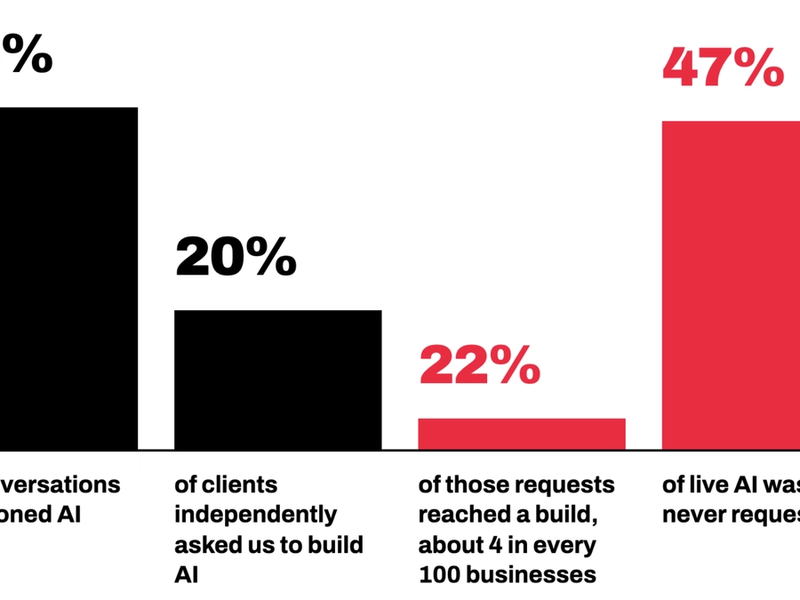
The AI Use Gap: What Businesses Ask For vs. What Gets Built
Read article
The API Key You Handed Over Is a Bigger Risk Than the Password You Wouldn't
Read article
CRM Data Enrichment: Turn Thin Records into Revenue
Read article


Let's make your workflow woes a distant memory.